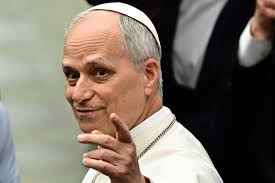
I was supposed to wait before publishing or otherwise revealing the events described herein. However, it’s been over a month now and nothing has happened, so I have decided to give the Pope a polite push – no, not a shove – to remind him, so to speak.
It all started back one day I was working in my office when my gardener, Rovindo, stuck his head in and said in his thick Argentine-Cordobés intonation: “Someone out here lookin for ya.”
I sighed, and stood up from my computer and stepped outside. There, to my surprise, stood a young man in clerical clothes. “Good afternoon,” he said in educated Spanish, “are you Señor Frank Tomás Esmit?”
“I am,” I replied. “And you are?” He said his name, but I don’t remember it. He turned to the black Volkswagen sedan behind him and opened the back door. An elderly man, also obviously some kind of priest, maybe a bishop, stepped out. He held out his hand, which I took and shook. “Can we go somewhere to talk, Señor Smith,” he asked.
I motioned for him to follow me as I headed back into my office, where I had left the door open. He closed it behind him. I motioned for him to sit in the only chair besides my own. It was a simple blue plastic job and I wondered if it would hold my visitor, a big man weighing at least two-hundred pounds. He probably had the same doubts, for he said he preferred to remain standing, that he wouldn’t be staying long. I sat down in my own executive type swivel chair, now very curious as to who the hell this guy was and why he had come to visit me, of all people. He handed me his card:
Monseñor X, Archbishop of Córdoba. (I prefer not to name him in case it all comes to nothing and I get sued for taking his name in vain.)
“What can I do for you Monseñor?” I asked him, in Spanish of course.
“I come at the request of Pope Leo to invite you to visit him in Rome,” he replied while looking in his briefcase. I was astonished but also amused. I laughed and could only say You’re kidding!
He seemed surprised at my reaction. “Not at all,” he said. “I’m also to tell you that there is a PTA in Air Europe for a round-trip ticket to Rome in your name. I have no idea what that means. I didn’t ask that airline because the Pope instructed me to keep his message and my visit to you confidential.”
Because of my long experience in the airline industry, both in Argentina and elsewhere, I knew very well what a PTA is: Prepaid Ticket Advice. It’s how you can pay an airline for a ticket in one country for transportation from another country. The one the Monseñor handed me was a ticket paid for in Rome for a ticket for me from Córdoba, Argentina to Rome, open date. So I could go to Air Europe’s office in Córdoba and they would supply the ticket – First Class by the way.
“But why me?” I asked.
“I have no idea,” he said, looking around my office skeptically. My “office” is a slightly remodeled tool-shed. Half of the shed is reserved by a wall for tools, machines and junk. The other half contains my desk, computer, printer, etc. loaded bookcases and a shelf for all the books I have written or translated (from German to English). The main house is about a hundred yards to the east. Not exactly the environment of a guy the Pope would be interested in meeting.
The silence lasted for as long as I thought about how I should answer the Pope – if he really was the Pope – and how I should express it. “Sure you won’t sit down?” I asked for no reason. He shook his head and frowned.
“Well, here’s the thing. I’m ninety-three years old and can’t make a trip like that. I mean, you see, first I’d have to go to Córdoba somehow, three-hundred kilometers away over that mountain range, then catch the flight, which would take about thirteen hours, to Rome.” I sighed. “Nowadays I don’t go anywhere, not even to Villa Dolores, so I fear I’d never make it. It’s a full day of what for me would be rigorous travel. I’d really like to go, but I’m simply too old.”
He sat down and stared at me, “You sure?” When I nodded he took out his cellphone and dialed a number, I mean clicked a number. After a while: “Get me the Pope”, in Italian. Finally, whomever he wanted to talk to (I still wasn’t convinced it really was the Pope) was on the other end. “He won’t go,” he said, still in Spanish, “says he’s too old.” He listened a while, then handed the phone to me. “It’s kind of warm in here. I think I’ll wait outside.” He went outside and again closed the door behind him. Was he obeying instructions? It didn’t feel warm, at least not to me.
“Hola.”
“Hello, Mr. Smith, how are you?” he said in American-intoned English. I wasn’t surprised, for I’d read that he was from Chicago.
“I’m fine thank you. Er, if you don’t mind my asking, how do I know you’re really the Pope and not some joker or maybe a crook?”
He laughed. “The guy who gave you the PTA is the archbishop of Córdoba. You can easily look him up on Google, with photo and all. Or do I have to send the archbishop of Buenos Aires?”
“Please don’t. But tell me why you want to see me, of all people. I’m not even Catholic.”
“Not anymore Catholic. That’s one reason, that you won’t be overly subservient to the Pope. I understand that you can’t travel to Rome because of old age. And even if that was not the reason, why should you?”
“I love Rome,” I said, “and if I were twenty years or even fifteen years younger and with a free first-class ticket in my hand, I would have gone.”
“Right,” he countered with the biggest surprise thus far, “So I’ll go to you.”
I laughed out loud. “You’re kidding. Not even Pope Francisco came back home to Argentina for a visit, probably because he knew he’d be mobbed like Messi, who, by the way, doesn’t dare come back to Argentina either. Instead he now lives and plays soccer in Miami, where he can at least walk down the street without being bothered, without even being recognized by most people. And you are thinking of coming here to Villa de las Rosas? You may not be Messi or Francisco, but hey, you’re the Pope”.
“That doesn’t worry me, Frank, I’d come incognito. You see, I have a Peruvian passport bearing the name Roberto Lima. I have a false mustachio and wig and some other makeup, so I won’t be recognized, especially not in Villa de las Rosas. By the way, call me Bob.”
This guy is either nuts and/or has some weird objective. Maybe he’s making a movie. I decided to play it cool and go along as if I believed him. “Let me know when you’re arriving and I’ll send someone to pick you up at the airport.”
“Which airport?”
“Córdoba of course, it’s the closest.”
“O.K. I’ll send you a WhatsApp. What’s your number?”
I smiled, shook my head in disbelief and gave him my number.
I stepped outside to give the archbishop his phone back. He looked at it, then at me, hoping I would say something, so I said, “The connection was loud and clear, thanks.” I turned and went back to my office and he went back to his car, where his chauffeur-cleric was holding the back door open for him.
That evening I told my wife about the Pope’s contact. She looked at me to see if I was serious and when she saw that I was, seemed to wonder if I was finally succumbing to dementia. Later, after having watched the latest episode of “The Americans” about Russian spies in America on Netflix, in going to bed I wondered if the Pope-dream would continue, if indeed it was a dream.
About a week later I received a WhatsApp from Bob: “Arriving Córdoba on Air Europe flight 369 at 09.50 Dec. 3. Saludos” (Not a dream after all)
December 3 was 2 days away so I called Eduardo, a taxi guy who regularly picks up and brings people to the Córdoba airport at a reasonable price. I told him to hold up a sign reading “Roberto L” to the passengers from Air Europe’s flight 369 emerging through the arrival doors. When he has Roberto tucked in safely in the back seat of his taxi, he should WhatsApp me. And yes, Bob speaks Spanish. Too late I thought that maybe I shouldn’t have told him that because Eduardo is a talker and is likely to converse with his passengers nonstop during the entire trip. The best trick for the passenger was to sleep or pretend to be asleep.
On December 3 at 10.30 I received confirmation from Eduardo, so I knew that he and Bob would arrive at my home, La Cruz del Sur in La Chacras, Villa de las Rosas, three hours later. I had told Eduardo to bring Sr. Lima to my office, not to the main house.
At 1.30 PM. they arrived. María Teresa had a couple of her friends visiting for lunch. I doubted that Bob would care to join them, so I made some sandwiches of peanut butter and jelly for us, and some water to drink.
Robert Prevost (yes, I believe now that it was really him) had a phony mustache pasted to his upper lip and wore large tinted glasses. Those and a passport identifying him as Roberto Lima, were a sufficient disguise. I didn’t ask him how he got the passport. Hell, he had lived and worked for years in Peru, was even a bishop there. In other words, he had influence.
After some polite niceties, he got right down to business. “I told Eduardo to pick me up later in order to make the Air Europe flight at 7 P.M. back to Rome”. I said we have a guest casita where he could stay the night, but he said that he couldn’t just disappear from the Vatican for more than a few hours. Francisco had taught him the trick. He could tell his Swiss body guards that he didn’t want to be disturbed by anyone until the following morning, because he wanted to pray and meditate in peace.
“Got it, Bob. Can we start with you explaining why you came all this way to talk to me, of all people?”
He nodded, then said, “I know that you are a disciple – if I may use that term – of Rudolf Steiner, who spoke strongly against Roman Catholicism, especially in three lectures you published in your electronic magazine, SouthernCrossReview.org.”
“Good reason for not wanting to talk to me,” I said.
“However,” he continued, ignoring my interruption, “you are presently interested in so-called Christian Hermeticism, as is shown by the arcana of Meditations on the Tarot you are presently publishing.” He paused as though expecting another interruption. I said nothing.
“You are aware, I assume, that Valentin Tomberg, its author, became a practicing Catholic.”
I nodded.
“Although he retained his belief in Rudolf Steiner and Anthroposophy.”
I nodded again.
“I also know that your original rejection of Catholicism was because of relatively minor offenses, such as the prohibition of certain books, such as The Three Musketeers.”
“How do you know that?”
“From your Memoir.”
“You read my Memoir! I’m flattered.”
“It’s very interesting. What I assume, but do not really know, is if your final break with the Church was related to your study of Rudolf Steiner’s works.”
I thought for a moment or two, then said, “Yes, that’s true.”
“I thought so,” he said, then, after seeming to decide to continue, “I would like to explain that I sympathize greatly with Steiner. What happened in that fundamentalist, defensive Catholic corner of Switzerland over a hundred years ago was indeed detrimental to Steiner’s Anthroposophy and himself. I believe, though, that the aggressive attitude and, perhaps actions, was restricted to that corner and did not come from the Vatican.”
“Whatever.” meaning I wasn’t impressed.
“Just one more question, Frank.”
“OK. Your Holiness.”
He caught the irony. “Call me Bob. Now, were you ever sexually abused by a priest?”
“No, I didn’t even know about that stuff until it became a huge scandal and common knowledge thanks to the press.”
“And the victims,” he added. Anyway, I assumed you were not a victim because if you were, it would certainly be at least mentioned in your Memoir.”
“If I remember correctly, the question was, ‘Why me?’
“Right. Well, you see you’re the kind of person who left the Church for a number of perhaps justifiable reasons, people whom I would like to see come back. In fact, if the Church is to survive this atheistic AI era, as many as possible must return.”
(More surprise, making me wonder even more if this guy, Bob, was really the Pope. He must have been thinking the same thing, that I would doubt that he was really the Pope.)
“The problem with that, Bob, is that I, and surely many others like me, have no intention of returning to the Church. And what about the young people?”
“I’m aware of that. So I would like to ask you, Frank, what I can do to make you, and others, change your minds?”
“Well, that’s a good question but not an easy one to answer, for whatever you do would not be likely to make me change my mind; I don’t know about the others.”
“Let’s try,” he said, smiling.
Actually, he was quite simpático, good at gaining your confidence. “OK,” I said, “let’s start with allowing women to be priests.”
“Okay, why?”
“You gotta be kidding. As long as women are excluded from the priesthood, it’s pure misogyny. Or do you have a reason?”
“The usual excuse is that Jesus only selected men as his apostles and of course Church tradition, and...”
“Look Bob”, I interrupted, “in preparation for your visit I checked Wikipedia and other internet sources. So, if you don’t have anything different or new, I’m not interested. What the Church says is merely an excuse for its misogyny. There’s also a book by Professor Karen L. King: The Gospel of Mary of Magdala -Jesus and the First Woman Apostle.”
“I know it,” he said.
“Furthermore, there is a movement called RCWP – Roman Catholic Women Priests – in the United States who have been ordained by bishops outside the authority of the Vatican and operate outside of official church law. These women serve communities that believe in a more inclusive and egalitarian form of Catholicism, but they are not officially sanctioned by the Vatican. They even have their own bishops. They claim to exist internationally, but I don’t know about that. I haven’t heard of them in Argentina. But in any case, they aren’t going away, so all you have to do is recognize, or sanction them.”
“Got it, anything else?”
“A bunch,” I said. “But the second of the two most important things is that priests should be allowed to marry. I could ask why they aren’t allowed to marry. Several popes have called it impossible. Well, I ask why impossible? I read somewhere that it wasn’t until the fourth of fifth century that priests weren’t allowed to marry, and it was so that when they died any property they had could go to the Church instead of their wives or children or other heirs. You can tell me if that’s true or not.” I paused, waiting for his reply, but he only nodded, which may or not have meant yes, true.
So I continued my rant. “Either way, it would make the Church much less attractive to pedophiles, consciously or unconsciously. As it is, and has been for many years, such people might want to become priests because it would give them access to children, whose parents would trust them.”
“Okay”, he said again, “anything else?”
“I could add Immaculate Conception – did you know that it’s a national holiday here in Argentina, where most people don’t even know what it means? They think it means that Jesus was immaculately conceived. You know: virgin mother. And then there’s reincarnation. But these last two aren’t as urgent, so for now I’ll stick to women priests and married priests. What do you say, Your Holiness?”
“Abortion?”
“No, that’s above my pay grade; no comment.”
He nodded, in what looked like agreement. “Just between you and me, between Frank and Bob, I agree with you. However, just to show you how difficult a change would be, there was a meeting just last week in the Vatican of a group of important cardinals and bishops and the like, about whether women should be allowed to become deacons…”
“What the hell´s a deacon?”
He laughed. “Sort of a third class priest – can’t hold mass or hear confessions. Anyway, the suggestion was rejected, as ‘not yet’, the majority thinking that it would be a first step toward ordination as priests. So if I were to sanction women priests or allow priests to marry, it could well cause a schism in the Roman Catholic Church. Over the centuries there have been too many of those. Today instead of a united Christian church we have a pot full of different denominations, such as the Eastern Greek and Russian churches, all the Protestant denominations, all with their own understanding of the Gospels.”
A horn blew three times outside. It was Eduardo come to take the Pope back to the airport. He stood up and offered his hand both as a goodbye and to help me stand up. “Muchas gracias, Frank,” he said. “You gave me exactly what I need. Now I must meditate on all I know and pray to God for guidance. I hope I can depend on you to keep my visit and our conversation confidential.”
“For how long? I intend to publish it eventually.”
“Give me a month. If you don’t hear from me by then, well, I’m not worried because even if you do publish, no one will believe you anyway.”
He smiled, walked out and into the back seat of Eduardo’s taxi and waved as they took off.
Hell’s bells, even I don’t believe me.